Elfrieda's suicidal despair
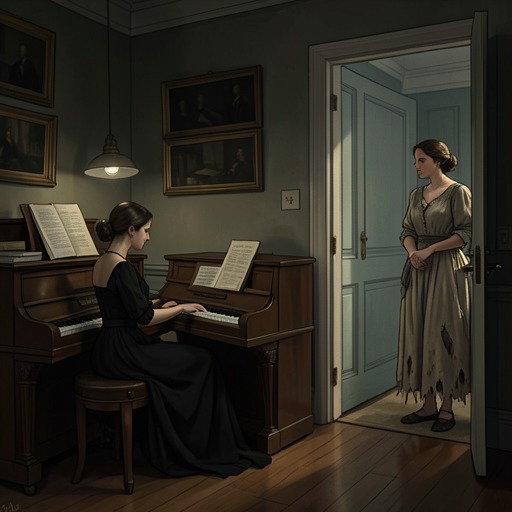
All My Puny SorrowsElfrieda's suicidal despair is a persistent crisis rather than a single episode, repeatedly placing her wish to end her suffering against her family's efforts to protect her. The novel traces that conflict through psychiatric care, private appeals to Yolandi Von Riesen, and the fragile hope attached to music, treatment, and the possibility of living together again. Her despair is not presented as a simple rejection of those who love her: the people she names as loved ones remain part of her life even as she asks to be allowed to leave it.
Recurrence and psychiatric care
Elfrieda's crises bring her repeatedly into hospital care. During one earlier attempt, she stopped eating and pleaded with Lottie and Nic not to contact a doctor. Yolandi went from the airport to her sister's bedroom and decided to call for medical help, despite Elfrieda's objections. Lottie remained at the dining-room table, unable to support one daughter's position over the other's. When the paramedics arrived, Elfrieda was taken to hospital; Yolandi's decision to intervene became a defining point in their relationship. At the emergency room, they acknowledged the conflict beneath their care for one another: Elfrieda wanted to die, while Yolandi wanted her to live, and they understood themselves as loving adversaries.
A later attempt involved pills. The note Elfrieda left had been written on lined yellow paper of the kind she had once used to design her distinctive AMPS signature. In green marker, she addressed God, conveyed that she felt there was no time left to make her mark, and listed the people she loved. She also asked them to understand and let her go. The list makes the attempt especially difficult for her family to interpret: her attachment to them is plainly present, but it does not cancel her stated wish to die. Lottie could not explain where the pills had come from.
When Janice, a psychiatric nurse who had met the family during earlier admissions, visited Elfrieda in hospital, she greeted her warmly and acknowledged the pain of seeing her there again. Janice rejected the idea that Elfrieda needed to apologize or had done something morally wrong. Instead, she described the attempt as an action arising from suffering and presented treatment as an effort to find other, healthier ways of addressing it. Elfrieda agreed to begin again, though she visibly struggled with the nurse's reassuring manner and with the expectation that she respond to a visitor's praise. Her difficulty accepting comfort does not mean the care is absent: the scene shows how even well-intentioned support can meet someone who is angry, ashamed, or unable to perform gratitude.
Despair, self-understanding, and divided hope
Yolandi tries to understand her sister's despair without claiming that she can resolve it. Elfrieda once compared herself to a man who could see only after an operation and then found the newly visible world unbearable. In her own account, she had never adjusted to reality or developed a tolerance for its ugliness. Yolandi responded practically, urging her to stop repeating a word that had begun to cause distress; Elfrieda experienced their exchange not as a conversation to end but as an effort to work something out. The mismatch captures a recurring limit in their intimacy: Yolandi looks for an immediate, workable response, while Elfrieda describes suffering that she does not believe can be fixed by a change in phrasing.
Her approach to language changes as the crises continue. The word love, which had once served as a mantra, came to feel doomed to her and was associated with panic and weeping. In hospital, she instead tried to maintain good form, even while deeply angry, particularly with herself. These details make despair visible in small acts as well as in emergencies: she attempts politeness, turns away from Janice, and smooths the creases in her blanket rather than responding to the emotional demand of a visitor's story about her music. The effort to appear composed exists beside, not in place of, her suffering.
Yolandi also questions whether Elfrieda's despair is an inborn and unchanging condition, wondering whether her earlier happiness and musical triumphs were only interruptions in a lifelong desire for release. The narrative does not settle that question or supply a diagnosis. When Yolandi asks whether her sister can identify reasons to stay alive as well as seeking a way out, Elfrieda does not offer a balanced account; she describes the contest as profoundly unequal. Later, she argues that Yolandi's own willingness to keep living rests on the possibility of discovering something unexpected, whereas she believes there is nothing left for her to discover. That reasoning makes their disagreement more than a difference in optimism: each sister uses the other's relation to uncertainty to argue for a different choice.
Assisted death and the limits of protection
The prospect of assisted death gives Elfrieda's request a specific destination. She asks Yolandi to take her to Switzerland, and Yolandi refuses, resisting both the request and its framing as one final act of help. The refusal is not easy certainty. Yolandi considers whether Elfrieda has a terminal illness or whether her desire to die has been present from the beginning, and she struggles to distinguish a lasting wish from one shaped by illness and immediate suffering. When she asks whether Elfrieda is thinking about reasons to remain alive, her sister does not reassure her. The questions expose how little Yolandi can know about the future while still feeling responsible for it.
Elfrieda does not tell Nic that she wants to go to Switzerland. When Yolandi asks about this in hospital, Elfrieda says that Nic would not take her and asks Yolandi not to tell him. The request makes Yolandi a keeper of a secret inside an already strained caregiving relationship: Nic is Elfrieda's husband and primary caretaker, while Yolandi is the person her sister has asked to help with a plan he would oppose. In another exchange, Elfrieda says that she is afraid of dying alone and feels as though she is begging for her life. Her language complicates any easy division between a person who wants death and a family that wants life; fear, pleading, and the request for assisted death coexist.
Yolandi's conversations with Julie show the burden the request transfers to others. Julie asks whether Yolandi is still considering killing her sister; Yolandi distinguishes that possibility from what she understands as helping her. She admits that she does not want Elfrieda to die but feels confronted by her sister's repeated pleas. Julie cannot decide for her and advises waiting to see whether treatment or medication will help. Yolandi agrees to wait, while fearing that Elfrieda could be discharged and die soon afterward. The Swiss plan remains uncertain, not a settled agreement or an accomplished journey.
Care, music, and the return of crisis
Nic and Yolandi try to turn fear into practical safeguards, but even those efforts reveal limits. Nic tells Yolandi that he has struggled to reach the care-team members and has been told that funding may no longer be available. He offers to pay for a team to watch Elfrieda, yet neither he nor Yolandi believes constant surveillance can solve the underlying problem. Their conversation moves between this impossible responsibility and ordinary matters: Nic's kayak and the bolts he needs from Minneapolis. The mundane detail does not erase the emergency; it shows how care continues amid the chores and plans of daily life.
Nic also tells Yolandi that Elfrieda has received Final Exit, a book about suicide. He hesitates to discard it because he considers that an invasion of her privacy and rights; Yolandi argues that it should be removed, and their disagreement remains unresolved. Their different responses expose a conflict between protecting Elfrieda and respecting her autonomy without making either position simple. Nic's preference for medication and regular exercise contrasts with Yolandi's increasingly desperate, sometimes fantastical ideas for keeping her sister alive. They also disagree about her touring: Nic remembers that Elfrieda has often said she cannot perform and then gone on to succeed, while Yolandi fears that surviving a performance may briefly energize her without changing her eventual wish to die.
That pattern returns around Elfrieda's opening concert with the Winnipeg Symphony Orchestra. After changing her mind, she resumes preparations, and Nic reports that rehearsal has gone well and that she seems excited, though tired. The apparent return of purpose does not prevent another crisis. Lottie and Tina Loewen visit despite Elfrieda's request for quiet before the concert and find her in serious condition; Tina calls emergency services, and Elfrieda is taken to intensive care. The swift reversal unsettles any assumption that renewed work or visible excitement means her despair has passed.
Yolandi returns to Winnipeg and sits with Elfrieda while she is unable to speak because of a breathing tube. She sings a song the sisters used to perform together, but the moment does not produce an answer about what should happen next. Elfrieda writes a question about how to continue on a pad of paper; Yolandi cannot give her a response, and the two remain quiet together. Later, before leaving for Tina Loewen's funeral in Vancouver, Yolandi tells Elfrieda that she wants to help and will bring her to Toronto for a break, while acknowledging that their ideas of saving her do not match. Elfrieda raises her arms to be held, and Yolandi falls into them. The gesture offers closeness rather than resolution: in the evidence presented, the struggle between Elfrieda's wish to die and her family's efforts to keep her alive remains ongoing.